
What Happens to Your AI When the Vendor Changes?
Enterprise organizations are integrating AI deeper and faster than ever. Models are embedded in application logic, customer-facing features, and decision workflows. Coding agents accumulate months of tuned prompts, validation pipelines, and orchestration logic. The productivity gains are real.
But so is the risk. What happens when the model you depend on gets deprecated, repriced, or acquired? What happens when your hardware vendor shifts its accelerator roadmap, or a provider you built around changes its licensing terms?
For regulated enterprises in particular, these are not hypothetical questions. They are architectural decisions that need to be made now, before the disruption arrives.
The deeper you go, the harder you are to move
The organizations that push hardest on AI integration get the greatest competitive advantage. But those same optimizations create switching friction. Institutional knowledge accumulates in prompts, retrieval pipelines, orchestration logic, and policy enforcement layers. Over time, that operational layer could become more deeply embedded than the model itself.
A forced model swap is not a configuration change. It is a requalification of every system that depends on that model's behavior. Even subtle shifts in reasoning or output structure can cascade into degraded performance, failed validations, or new compliance exposure. Add long-duration licensing commitments into the mix, and a vendor change can mean stranded spend on top of engineering disruption.
The sources of disruption are varied and accelerating. A model provider deprecates a version you have built around. An acquisition changes a vendor's product roadmap overnight. A hardware supplier shifts its accelerator strategy. Recently, the Pentagon designated Anthropic a supply chain risk, forcing organizations with deep dependencies to confront the operational cost of a sudden provider restriction. That was a government action, but the enterprise implications are the same: if your architecture cannot absorb a provider change, you carry that risk whether the trigger is geopolitical, commercial, or technical.
Integrate deeply, but build for portability
At Kamiwaza, we do not believe the answer is to slow down AI adoption or overrotate toward portability at the expense of real productivity. The answer is to build the right abstraction layer so that deep integration and provider flexibility coexist.
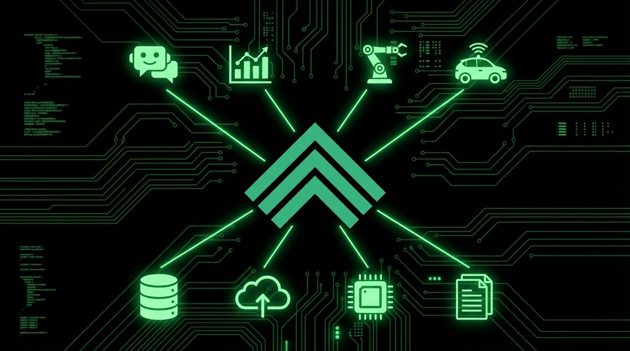
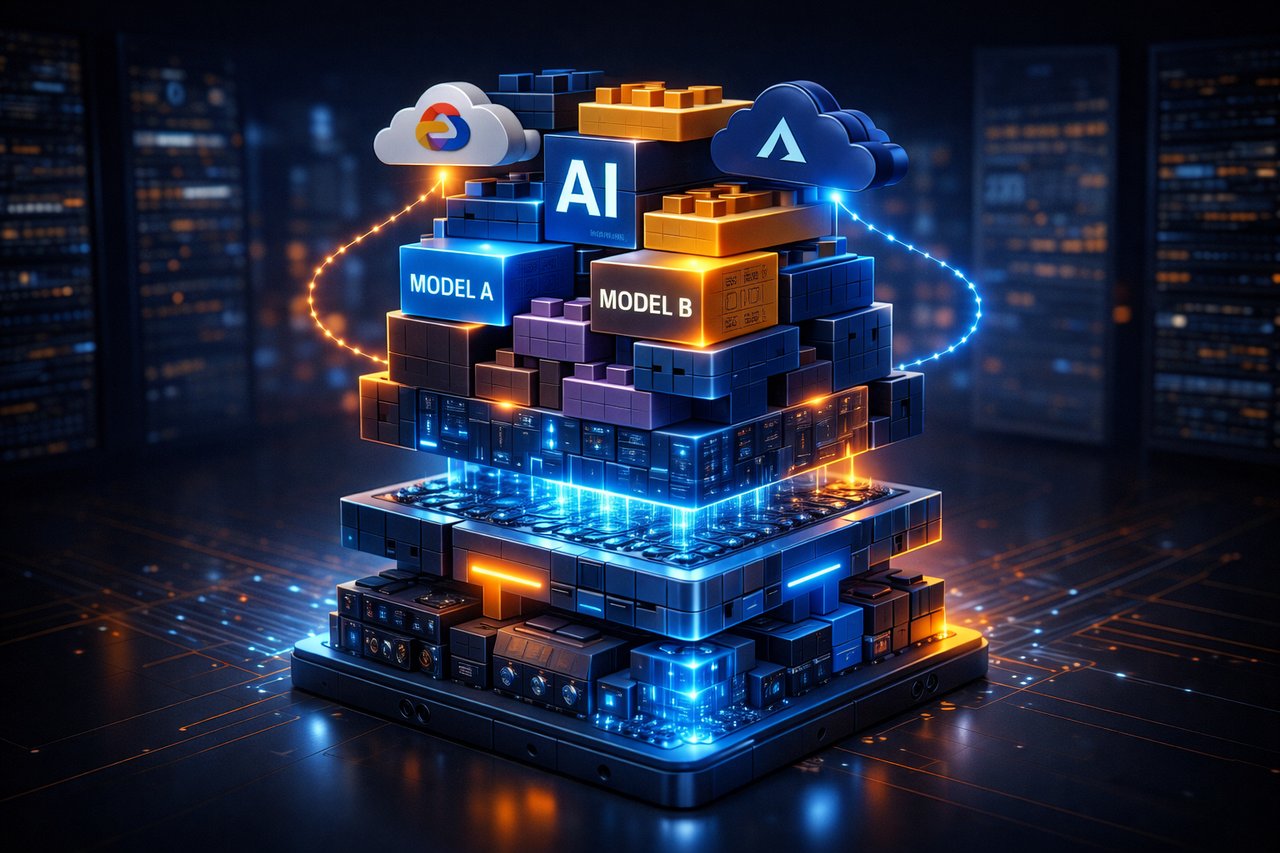
Kamiwaza is silicon, cloud, data, and model agnostic by design. Your applications and workflows should outlive any one model, cloud, GPU, or provider contract.
In practice, this means applications call a consistent API regardless of which model runs underneath. Orchestration assets are versioned and portable. Governance is enforced at execution time. Model changes are managed like releases, with structured evaluation and behavioral baselines, so a swap is a controlled event rather than an emergency.
The disruptions will keep coming
Model deprecations, licensing shifts, M&A activity, hardware roadmap changes. These are not edge cases. They are the operating environment for enterprise AI. The organizations that absorb these changes best will not be the ones that picked the right vendor. They will be the ones that built an architecture where the vendor choice is a variable, not a foundation.
We published a full point of view on why provider-agnostic AI orchestration is now an architectural requirement for the enterprise, and how Kamiwaza operationalizes it across models, clouds, data, and silicon.
Read the full paper: The Case for Provider-Agnostic AI Orchestration