

AI Data Sovereignty: How Agents Create New Egress Paths

Data residency gave enterprises a practical answer to a difficult governance question: where is our information stored? Organizations could choose a region, keep regulated records inside an approved environment, document the location, and apply familiar controls around infrastructure and access. While that answer still matters, it no longer describes the full data path of an AI system.
An AI agent does more than read a record and return a response. It can retrieve information from several systems, send context to a model, call tools, create derivative content, retain memory, communicate with another agent, and initiate an external action. Each step can create an egress path, even when the source record and the application remain in the approved cloud region. AI data sovereignty therefore depends on controlling what may cross the enterprise boundary, in what form, for what purpose, and under whose authority.
Data Residency Covers Storage, Not the Full Runtime
Residency is a property of infrastructure. It answers where a database, object store, backup, or model instance is located. Sovereignty is a broader operating condition. It requires verifiable control over collection, retrieval, processing, inference, disclosure, retention, and onward transfer. The difference becomes visible when an agent connects systems that were previously governed as separate domains.
The NIST Generative AI Profile treats privacy and information security as risks to manage across the AI lifecycle, including risks introduced by third-party models, embedded tools, and external data.[1] A regional deployment choice therefore cannot substitute for a runtime map of every component that receives, transforms, or transmits sensitive context.
The next architectural question is how that control holds when agents are allowed to act. Once a system can choose tools and coordinate multiple steps, the boundary must govern pathways as well as locations.
Five Ways Agents Expand the Egress Surface
- Inference requests. Prompts can contain raw records, retrieved passages, identifiers, or summaries. If inference runs outside the protected environment, sensitive context may cross the boundary even though the system of record remains in place.
- Tool calls. Agents can pass data to email, collaboration, case-management, payment, search, or analytics services. A permitted tool may still be used with the wrong data, destination, or scope.
- Generated outputs. A response can reveal protected facts directly or combine permissible fragments into a sensitive conclusion. Output control must consider both source data and what the model can infer from it.
- Memory and shared context. Persistent memory can carry sensitive information into later sessions, users, or workspaces unless retention, isolation, and reuse are explicitly governed.
- Agent-to-agent communication. Delegation creates another transfer point. The receiving agent may operate with different tools, credentials, model providers, or retention settings.
These are operational risks, not theoretical edge cases. The OWASP Top 10 for Agentic Applications identifies tool misuse as a path to data exfiltration and warns that agents may chain legitimate tools, operate under overly broad privileges, or send internal information through an external channel while every individual component appears authorized. Effective controls must therefore follow the transaction across the entire workflow.
The Regulatory Stakes in Financial Services and Healthcare
Financial Services: Follow Customer Information Through the Workflow
Consider an agent supporting customer due diligence or fraud investigation. It may retrieve identity records, transaction histories, account notes, sanctions data, and internal policies; develop a risk summary; call an external verification service; and route a case to an analyst. A residency review might confirm that the core records remain in an approved region. A sovereignty review asks which fields entered each tool call, where inference occurred, whether the agent inherited the analyst’s permissions, what appeared in the case summary, and which events were logged.
For financial institutions under Federal Trade Commission jurisdiction, the Safeguards Rule requires an information security program that accounts for where customer information is collected, stored, or transmitted. Its guidance addresses access controls, encryption in transit, application security, logging, monitoring, and service-provider oversight. Other financial institutions operate under their applicable regulators, but the architectural lesson is consistent: the organization needs evidence about the complete handling chain, not a single storage address.
Healthcare: Enforce Purpose and Minimum-Necessary Use
Now consider an agent coordinating a referral or prior-authorization workflow. It may retrieve a clinical record, payer policy, eligibility data, and scheduling information; generate a supporting summary; and send the result to another organization. HHS states that the HIPAA Security Rule requires technical safeguards including access control, audit controls, authentication, integrity protections, and transmission security for electronic protected health information. The HIPAA Privacy Rule’s minimum-necessary standard generally requires covered entities to limit uses, disclosures, and requests for protected health information to what is needed for the intended purpose, subject to stated exceptions such as treatment disclosures.
For an agent, that requirement cannot be reduced to whether a user can open a patient record. The system must also determine which portions are relevant to the task, whether a tool is an approved destination, what the receiving party is permitted to receive, and whether the generated output reveals more than the workflow requires. Purpose, relationship, and context become part of the access decision.
Build a Governed Boundary Around Every Path
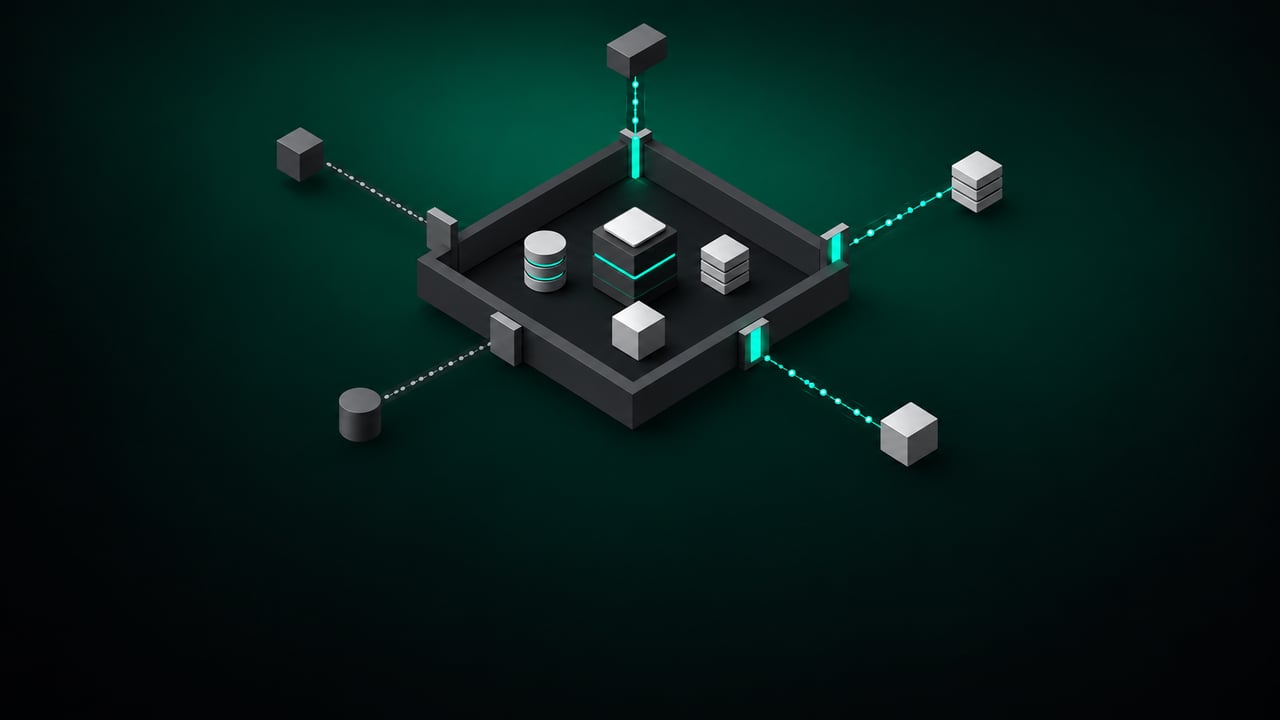
A durable AI sovereignty architecture treats the enterprise boundary as a controlled execution environment. Information can move through approved pathways, but each pathway is explicit, scoped, inspectable, and enforceable. Five control layers make that model practical.
- Workload placement and local inference: Route models and processing to the environment where sensitive data resides so raw information does not need to travel to a remote inference service.
- Policy-aware retrieval: Evaluate identity, relationship, purpose, data classification, and jurisdiction before retrieval, then return only the context required for the task.
- Inherited, least-privilege authorization: Keep the agent’s authority tied to the initiating user and approved workflow rather than a broad service account.
- Tool and output controls: Use approved destinations, schema validation, field-level filtering, egress allowlists, and confirmation thresholds for consequential transfers or actions.
- Reconstructable records: Capture the initiating identity, permissions, sources, model and tool path, policy decisions, outputs, human interventions, and final disposition at a level appropriate to the risk.
How Kamiwaza Connects Location, Access, and Egress Governance
Kamiwaza brings these controls together within an enterprise AI orchestration layer. Its Distributed Data Engine connects to data where it already resides, while the Inference Mesh supports placement of AI processing within the appropriate enterprise environment. Relationship-Based Access Control keeps agent access aligned with the requesting user’s real relationship to the data and the task, rather than assigning the agent a standing, broadly privileged identity.
Governance controls then provide the connection between access and action: what an agent can retrieve, which tools it can invoke, where a workload may run, and what record remains after execution. This architecture can support an organization’s security and compliance program, although technology does not determine compliance by itself. Policies, risk decisions, legal interpretation, operational ownership, and ongoing testing remain enterprise responsibilities.
The result is a protected enterprise boundary with controlled pathways. Financial-services teams can keep customer information within approved processing and disclosure rules while enabling agents to coordinate investigations. Healthcare teams can apply purpose-aware access and transmission controls across workflows that touch clinical, administrative, and partner systems. In both cases, governance becomes part of execution rather than a review performed after data has already moved.
From a Residency Statement to a Sovereignty System
The right executive question is no longer only, “Where is our data stored?” It is, “Can we prove where sensitive information traveled, what changed form, which policy authorized each transfer, and whether every destination was permitted?” That question reflects how agents actually work and gives security, compliance, and infrastructure leaders a shared standard for production readiness.
Data residency remains one control within that standard. AI data sovereignty emerges when location, retrieval, inference, tool use, outputs, memory, and auditability are governed as one system. Organizations that build this control plane before agent adoption accelerates will be better prepared to expand useful automation while retaining authority over valuable information.
Explore Kamiwaza’s security architecture to see how distributed processing, relationship-based access, governance controls, and auditable execution can support enterprise AI within a protected boundary.