

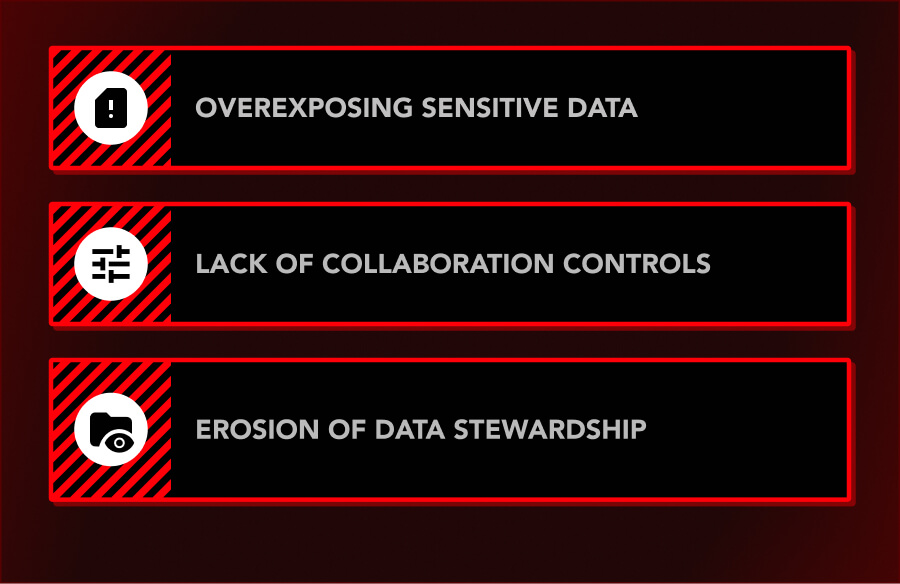
In cross‑functional projects, stakeholders from HR, finance, legal, and product groups must collaborate while respecting strict data rights and specialized toolsets. Sharing information across these silos is essential for success, yet it frequently risks overexposing sensitive data or misaligning strategic efforts. Standard AI tools often default to broad permissions or restrictive silos, and many generative AI workspaces lack the collaboration controls necessary to prevent data leakage. Teams in regulated industries require a way to collaborate across organizational boundaries without forcing data owners to surrender stewardship. Without granular, contextual
Collaborate Securely with AI and Your Team
In cross‑functional projects, teams need to work together while respecting different permissions. Marketing, finance, legal and HR may each need different information and tools, yet they must stay aligned on a specific project. Kamiwaza’s Workroom unites business users and AI agents in a shared, governed environment where everyone can collaborate, share context and use digital co‑workers without overexposing sensitive data. Contextual, relationship‑based authorization keeps data in place and ensures that each participant sees only what they are entitled to see.
Teams and AI Need Governed Boundaries
Purpose‑built for Secure Collaboration
Workroom gives your teams an isolated, multi‑tenant execution space with compartmentalized access controls and temporary rooms that can be deleted once a session is over. Using Relationship‑Based Access Control (ReBAC) and contextual authorization, Workroom enforces permissions based on the current relationship between the actor, task, data domain and organization, not just static roles.
Relationship‑based Authorization
Instead of relying on static roles, Workroom evaluates the current relationship among users, agents, data and projects. Access can change dynamically based on delegated authority, project scope, department, and data classification. This model preserves stewardship and allows sensitive data to be shared across organizations with granular controls.
Multi‑tenant Isolation
Workrooms are built as isolated containers for each project or mission, ensuring that data, context and agents never leak between teams or sessions. Each session is torn down when work is done, leaving no residual state to compromise.
Shared Context & Collaboration
Multiple team members can join the same Workroom session, see what others (human or agent) are doing, and share context and citations. This makes it easy to hand off tasks, collaborate on complex workflows, and ensure everyone is working from the same information.
Auditability & Compliance
Every user and agent action, authorization decision, and output is captured as part of one continuous record. This audit trail supports incident investigation, compliance reporting and internal oversight across regulated industries.
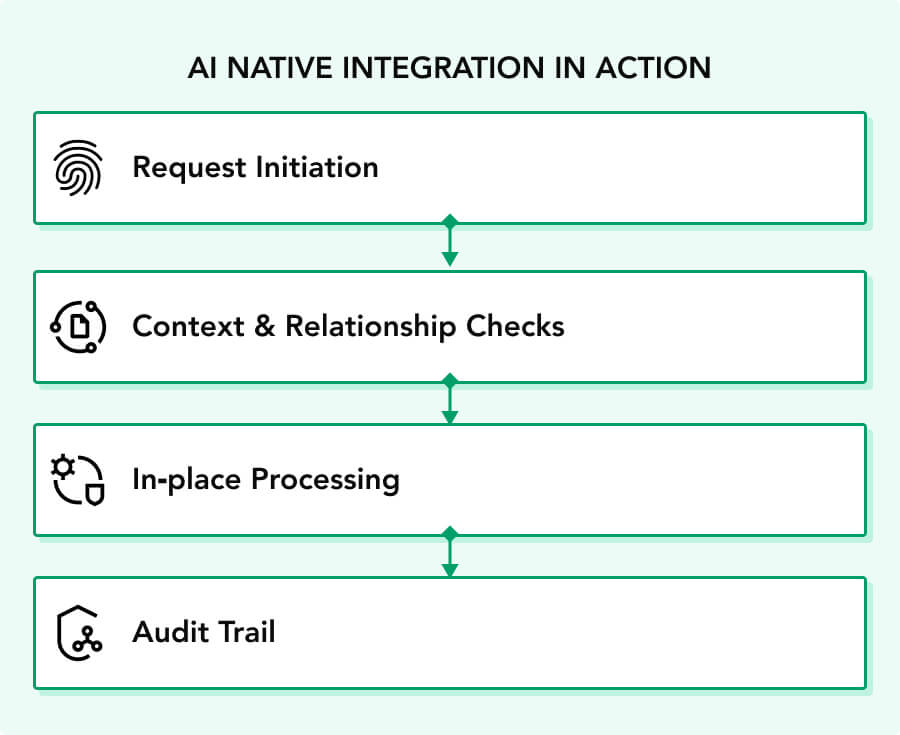
Govern the Full Request‑to‑result Chain
Many AI security solutions address only one layer: identity enforcement, model gateways, runtime controls or logging. Kamiwaza’s security features built into Workroom govern the entire chain across cross‑functional teams:
-
Request Initiation
A user or agent enters a Workroom and makes a request. - Context & Relationship Checks
The security features built into the Kamiwaza platform determine which data and tools each participant (human or AI) can access in the current context. - In‑place Processing
Agents orchestrate multi‑step workflows where the data lives; they share results and context across team members without moving raw data. - Audit Trail
Every action, decision and output is logged for compliance and oversight.
Uncompromising Collaboration and Control
Security and Collaboration
With Workroom, you no longer need to choose between collaboration and security.
Governed Resource Sharing
Cross‑functional teams can safely work with AI to share context, digital co‑workers and skills across projects while maintaining strict compliance and stewardship.
Accelerated Innovation
The platform accelerates innovation and decision‑making by bringing people and AI together, unlocking high‑value initiatives with confidence.
FAQs About Distributed Intelligence
A secure AI workroom is an isolated, governed environment where teams and AI agents collaborate on sensitive data. It enforces relationship‑based authorization and logs every action for auditability.
Traditional chat tools focus on single‑user interactions and lack governance. Workroom provides a secure, multi‑tenant workspace with granular controls, shared context, and deep audit trails. It integrates with enterprise SSO and supports supervision and oversight of agents, creating trust and accountability.
Workroom keeps data where it lives and applies ReBAC to decide who (or what) may access it. It enforces data locality, computational isolation, network micro‑segmentation and temporal boundaries, preventing unauthorized movement or exposure.
Workroom uses a contextual authorization engine that evaluates the relationships between users, agents, data domains and organizational structures at request time. Permissions change dynamically based on factors such as delegated authority, project scope and data classification, ensuring that access aligns with the right working context.
Yes. Workroom supports collaborative sessions where multiple users and agents share context and see each other’s actions. Each participant’s permissions are evaluated by the ReBAC engine to ensure they can only access what they are entitled to.
Experience Workroom
Stop trying to force outdated tools onto modern AI collaboration. See how Workroom’s secure, relationship‑driven environment empowers your teams and agents to do their best work.